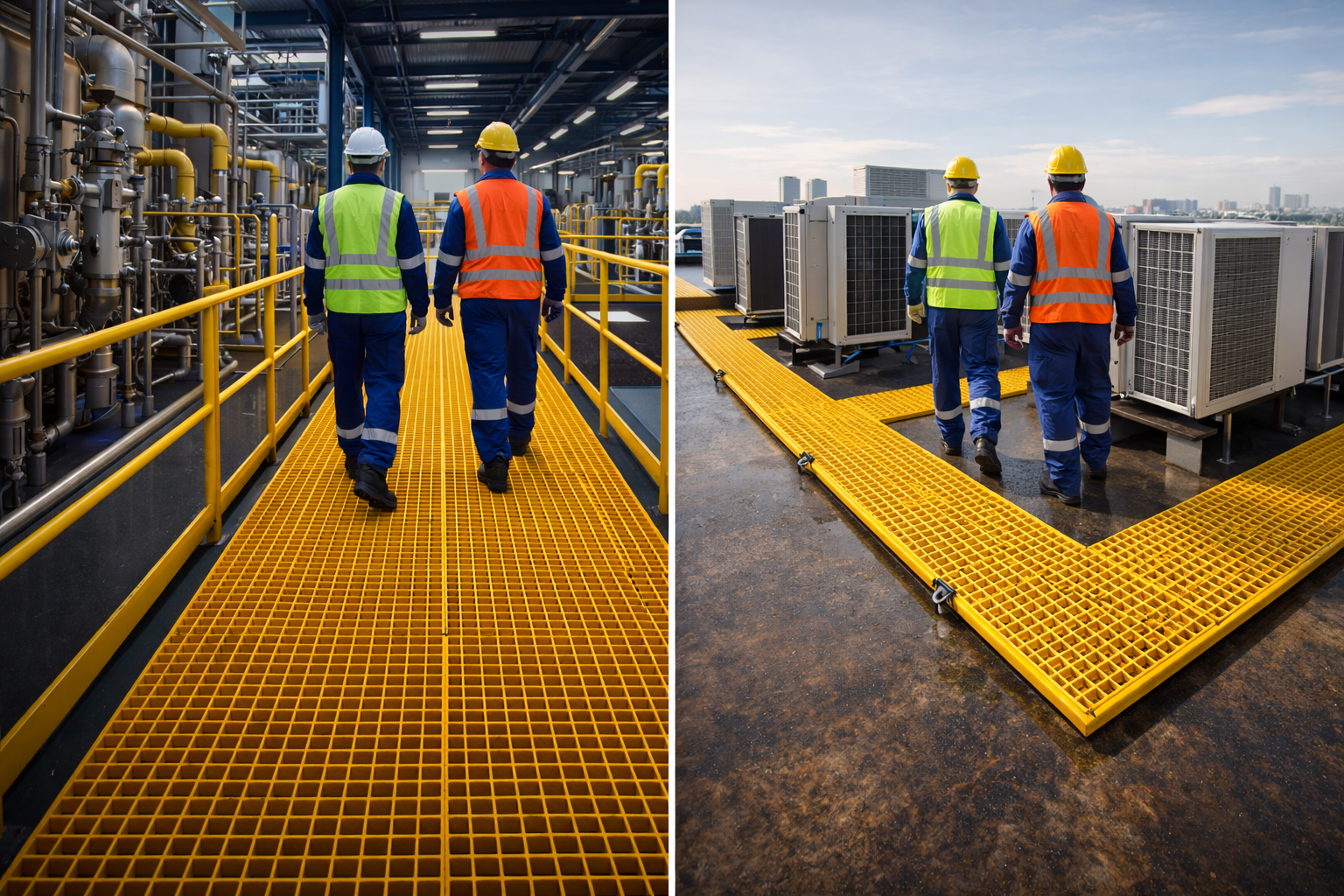
When a facility manager signs off on a roofing specification, the conversation rarely ends at purchase price. The more important question — one that directly determines whether the investment pays off — is how long that roof will last, how much it will cost to maintain, and when it will need replacing. These are questions the FRP sheets lifespan record answers convincingly.
Fiberglass reinforced plastic panels have quietly established a three-decade track record across some of the harshest operating environments on earth: chemical processing zones, coastal industrial facilities, food-grade production units, and heavy-load warehouses. This guide examines what drives that longevity, what routine care looks like, and how the total cost of ownership compares against conventional alternatives.
What Determines How Long a Roofing Sheet Lasts?
The service life of any overhead panel is shaped by three interacting variables: the material’s intrinsic resistance to degradation, the severity of the environment it operates in, and the quality of installation and upkeep it receives. Before exploring the durability of FRP sheets specifically, it helps to understand how these forces act on roofing materials in general.
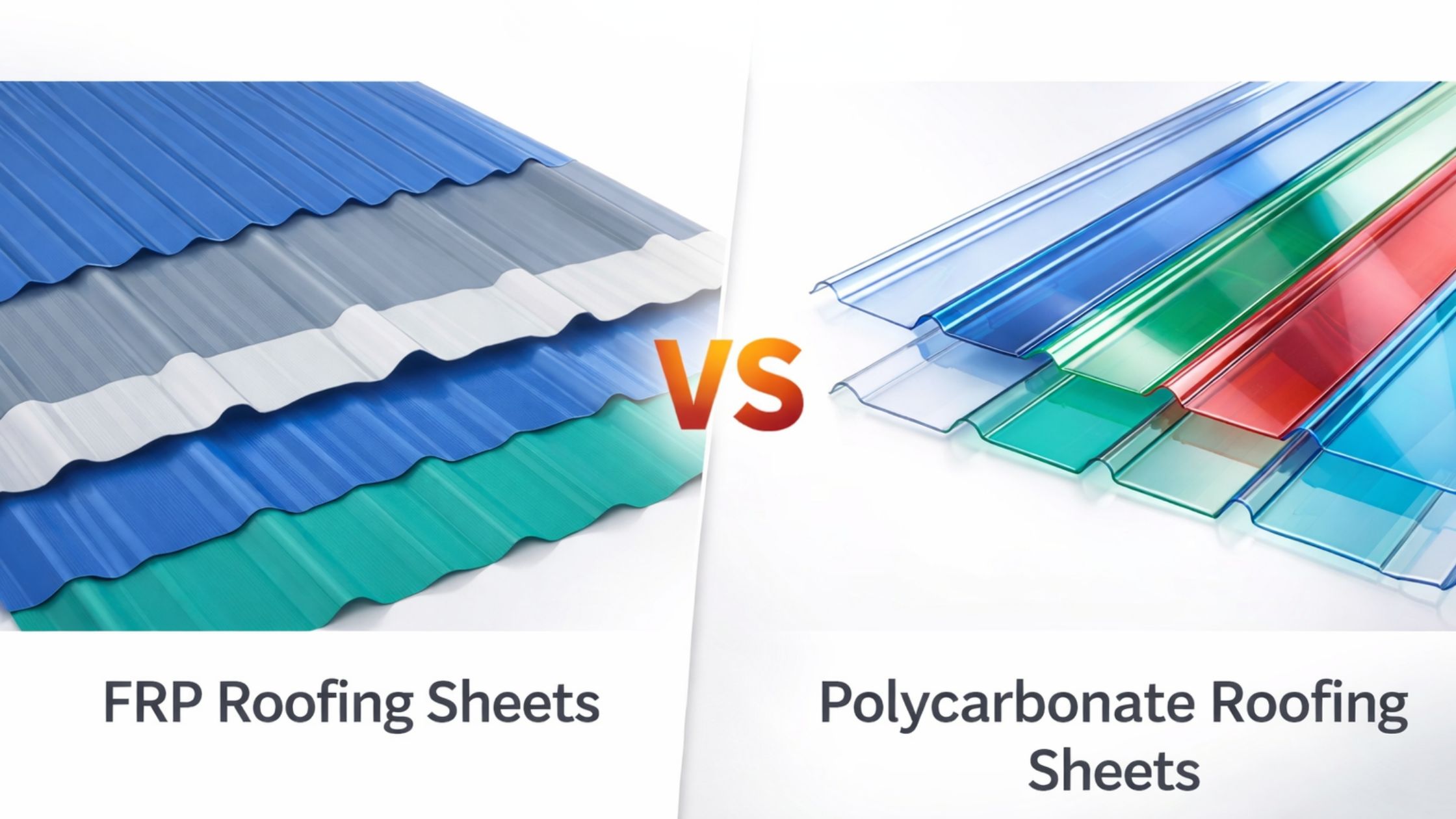
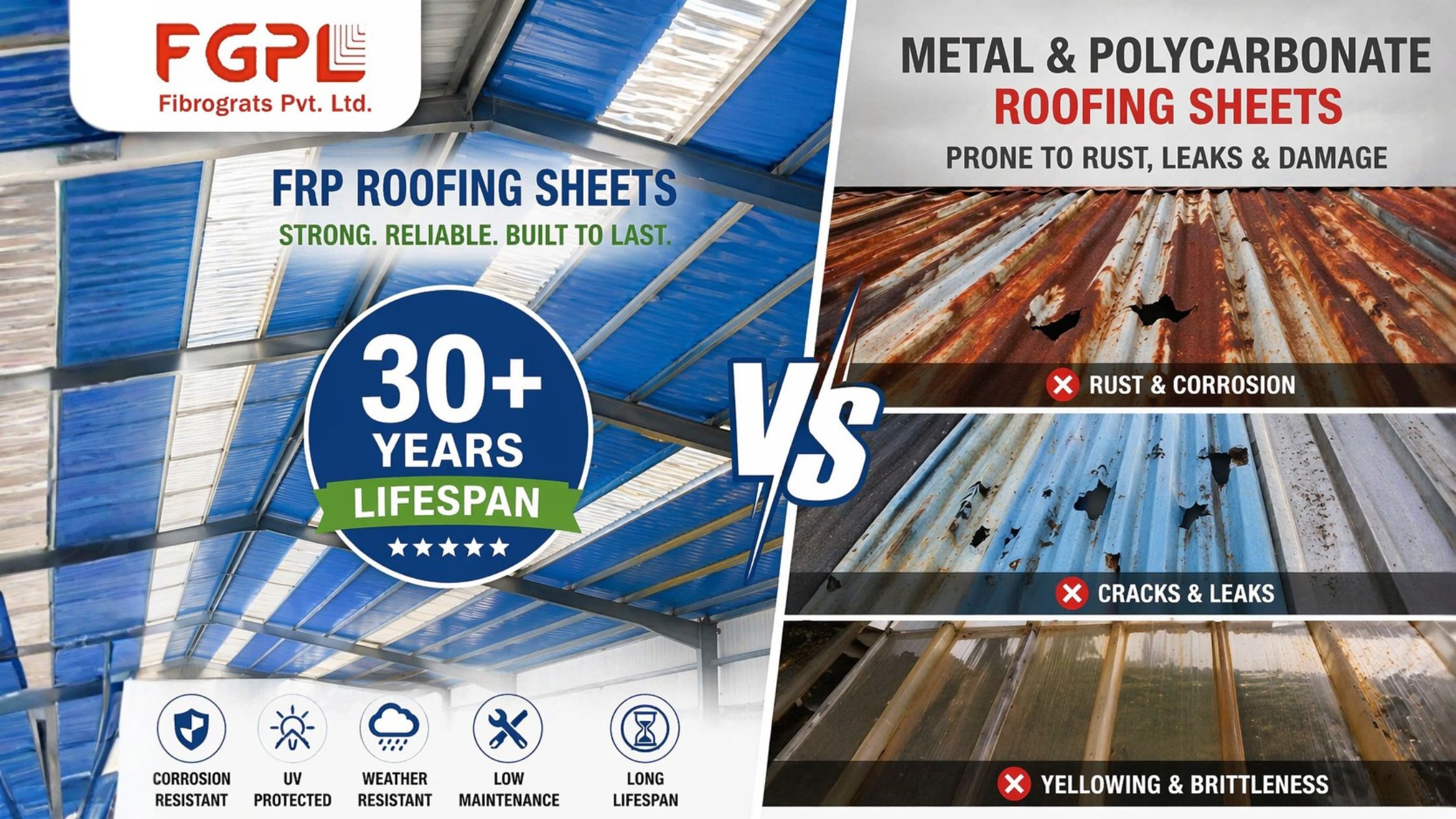
Metallic sheets — galvanized steel, aluminum, and their alloys — begin degrading from the moment they are installed in chemically active or humid environments. Oxidation is the primary enemy, but UV radiation, thermal cycling, and mechanical fatigue compound the deterioration. Conventional plastics and polycarbonate panels suffer a different fate: UV-driven embrittlement and chemical crazing can render them structurally unreliable within a decade in demanding settings.
FRP’s composite architecture addresses these failure modes at a fundamental level. The glass fiber skeleton provides tensile and flexural strength. The polymer resin matrix encapsulates those fibers and acts as a chemical barrier. The result is a material that does not rust, does not absorb moisture, resists a wide range of aggressive chemicals, and maintains structural integrity across temperature extremes.
The FRP Sheets Lifespan: Stage by Stage
Understanding the industrial roofing sheet lifespan over time helps maintenance planners anticipate what to inspect and when. A correctly specified and installed FRP panel moves through distinct phases across its service life.
| Maintenance Task | FRP Sheets | Galvanized Steel | Polycarbonate |
| Cleaning | Annual wash with mild detergent Low | Quarterly rinse + annual inspection Medium | Bi-annual + channel flushing Medium |
| Anti-corrosion coating | Not required None | Every 5–8 years Medium | Not applicable None |
| Structural inspection | Annual visual; full survey every 10 yrs Low | Annual visual + corrosion probe Medium | Annual visual + UV degradation test Medium |
| Fastener re-tensioning | Year 1–2 check; thereafter if disturbed Low | Every 3–5 years due to corrosion Medium | Every 3–5 years due to thermal expansion Medium |
| Panel replacement | Selective at 25–30 years Low | Partial at 10–15 yrs; full at 20 yrs Medium | Partial at 10–12 yrs; full at 18 yrs Medium |
| Painting / surface treatment | Not required None | Every 7–10 years Medium | Not applicable None |
The Durability of FRP Sheets: What Really Sets Them Apart
The durability of FRP sheets stems from a set of material properties that work in concert rather than independently. No single characteristic explains the longevity — it is the combination that makes FRP so effective in demanding environments.
Corrosion Immunity
Unlike any metallic roofing system, FRP contains no iron, no zinc, and no material that can engage in electrochemical corrosion. In environments where acidic vapors, chloride-laden air, or alkaline cleaning agents are present — chemical plants, food processing facilities, coastal warehouses — this immunity eliminates the single largest cost driver in metallic roof lifecycle management: corrosion-driven replacement.
Structural Stability Under Load
The glass fiber reinforcement within FRP panels provides a high strength-to-weight ratio that allows wide-span installations without excessive purlin frequency. Under wind, snow, or equipment access loads, panels deflect and return to form rather than permanently deforming — a characteristic known as elastic recovery. This resilience is particularly important in industrial settings where rooftop mechanical access is routine.
Thermal and UV Stability
FRP panels remain dimensionally stable across the wide temperature swings common in industrial environments — from sub-zero cold storage to the radiant heat above furnace areas. The UV-stabilized surface veil is the primary defense against the solar degradation that shortens the life of polycarbonate and certain plastics. Quality FRP manufacturers apply this veil as an integral part of the lamination process, not as a post-production coating that can peel or abrade over time.
A well-specified FRP installation in a chemical plant does not ask for a maintenance intervention for its first decade. That is a claim no metal roofing system can make in the same environment.
Fire-Retardant Options for High-Risk Environments
Standard-grade FRP is combustible, which is acceptable in many industrial settings. However, fire-retardant (FR) grades manufactured with alumina trihydrate-loaded resins or halogenated resin systems can meet international fire performance standards including BS 476, ASTM E84, and IS 12866. This makes FR-grade FRP suitable for petrochemical facilities, power generation plants, and storage areas where fire compliance is mandatory.
Maintenance Requirements: What Industrial Roofing Sheet Lifespan Depends On
One of the most commercially significant aspects of the industrial roofing sheet lifespan for FRP is the minimal nature of its maintenance program. Unlike steel — which demands periodic repainting, anti-corrosion treatment, and inspection for rust-through — FRP roofing panels ask very little of facility maintenance teams.
Maintenance Task
FRP panels can be cleaned with standard pressure washing, mild alkaline detergents, or dilute acid solutions without surface damage. In food processing environments, sanitizing agents used for floor and equipment cleaning are safe to use on FRP roofing without affecting the laminate — a genuine operational convenience for facilities with high hygiene standards.
Long-Term ROI: The FRP Sheets Lifespan Advantage in Numbers
Procurement decisions based solely on per-square-metre installed cost systematically underestimate the true financial advantage of durable materials. When the complete cost picture is assembled — initial supply and install, periodic maintenance, repair interventions, full or partial replacement, and operational disruption — the FRP sheets lifespan delivers a substantially lower total cost of ownership than shorter-lived alternatives.
The economics become even more favorable when operational disruption costs are included. Every roofing repair or replacement requires scaffolding, production downtime, and safety management. A facility that avoids two full roofing interventions over a 30-year period — which is a realistic outcome with FRP — saves not just the material and labor cost of those interventions, but also the lost production time and safety risk that accompany them.
For capital-intensive facilities — refineries, pharmaceutical plants, food processing units, power stations — the value of minimized downtime often exceeds the material cost savings themselves. This is why engineering teams that account for total cost of ownership consistently favor FRP for long-term roofing specifications.
Matching FRP Grade to Your Environment
Not all fiberglass reinforced plastic panels are equivalent, and the single most important decision in maximising the durability of FRP sheets over their intended service life is matching the resin system to the chemical and thermal environment the panels will face.
Standard Polyester Resin — General Industrial
Suitable for roofing in environments with moderate humidity and general atmospheric exposure. Standard polyester panels offer the lowest initial cost within the FRP family and perform adequately in warehouses, logistics facilities, and light manufacturing buildings without aggressive chemical exposure.
Isophthalic Polyester — Moderate Chemical Exposure
An upgrade over standard polyester with improved hydrolytic stability and enhanced resistance to weak acids, alkalis, and humidity. The preferred choice for food and beverage facilities, water treatment infrastructure, and general process buildings where occasional chemical splash or vapor contact is expected.
Vinyl Ester Resin — Aggressive Chemical Environments
The highest-performance standard resin for FRP roofing. Vinyl ester provides exceptional resistance to oxidizing acids, chlorinated solvents, aromatic hydrocarbons, and high-concentration alkalis. For chemical processing facilities, electroplating operations, acid storage areas, and marine industrial buildings, vinyl ester is the specification of choice for maximizing service life.
Fire-Retardant (FR) Grades — Regulated Facilities
Available across all resin families, FR-grade FRP incorporates additives that inhibit flame spread and reduce smoke generation. Essential for facilities where fire safety codes mandate specific performance classifications — including petrochemical storage, power plants, and pharmaceutical manufacturing.
Industries Where FRP Lifespan Delivers the Greatest Advantage
The performance advantage of FRP is not uniform across all building types. The return on long service life is highest where alternative materials fail fastest and where operational disruption carries the highest cost. The following sectors represent the strongest case for FRP roofing on lifespan and ROI grounds.
Chemical and Fertilizer Plants: The combination of acidic vapors, chloride contamination, and constant humidity creates conditions where galvanized steel typically requires full replacement within 10–12 years. FRP installations in the same environments routinely achieve 25–30 year service lives with no structural intervention, representing a genuine step-change in lifecycle cost.
Wastewater and Effluent Treatment Facilities: Hydrogen sulfide generated by biological treatment processes is among the most aggressive corrosives in the built environment. It attacks metal at an accelerated rate that makes anything other than a non-metallic roofing solution economically and operationally impractical. FRP’s chemical inertness to H₂S and similar compounds makes it the material of choice for these facilities.
Food and Beverage Processing: Hygienic environments require surfaces that do not harbor bacteria, can be cleaned with sanitizing agents, and do not release particles or rust into production areas. FRP satisfies all three requirements. Its longevity in humid, chemically washed environments means maintenance teams can focus on production cleanliness rather than roof management.
Coastal and Marine Industrial Buildings: Salt-laden air is one of the most demanding atmospheric environments for any roofing material. Metal corrosion accelerates dramatically within 500 metres of the coastline. FRP’s complete indifference to saline environments — as demonstrated by its established use in boat building and marine infrastructure — makes it uniquely suited for coastal industrial roofing.
Power Generation and Utilities: Cooling tower structures, switchgear enclosures, and cable routing areas in power plants combine moisture, chemical exposure, and the need for electrical non-conductivity. FRP addresses all three simultaneously — a combination that no metallic material can match without additional coatings and insulation treatments.
Glass fiber reinforced plastic panels are not simply a modern alternative to steel or polycarbonate — they represent a fundamentally different engineering approach to roofing longevity. Where conventional materials engage in a slow, costly battle against corrosion, UV degradation, and chemical attack, FRP removes those failure mechanisms from the equation entirely.
The 30–35 year service life achievable with correctly specified FRP is not a theoretical maximum — it is a field-verified outcome documented across industrial installations in chemical processing, marine environments, and food production facilities. When that service life is combined with near-zero routine maintenance costs, the total cost of ownership advantage over 20 or 30 years is decisive.
For facility managers, procurement engineers, and plant owners evaluating overhead enclosure solutions for new builds or re-roofing projects, the long-term ROI case for FRP roofing is among the most straightforward in industrial construction specification.
Get a specification recommendation for your facility
Our technical team will assess your environment and recommend the right FRP grade.