Introduction
Industries that handle chemicals require reliable storage solutions that can safely contain corrosive and hazardous materials. Choosing the right storage tank is critical because it directly affects operational safety, maintenance costs, and long-term durability. Two commonly used options in industrial chemical storage are FRP tanks and steel tanks.
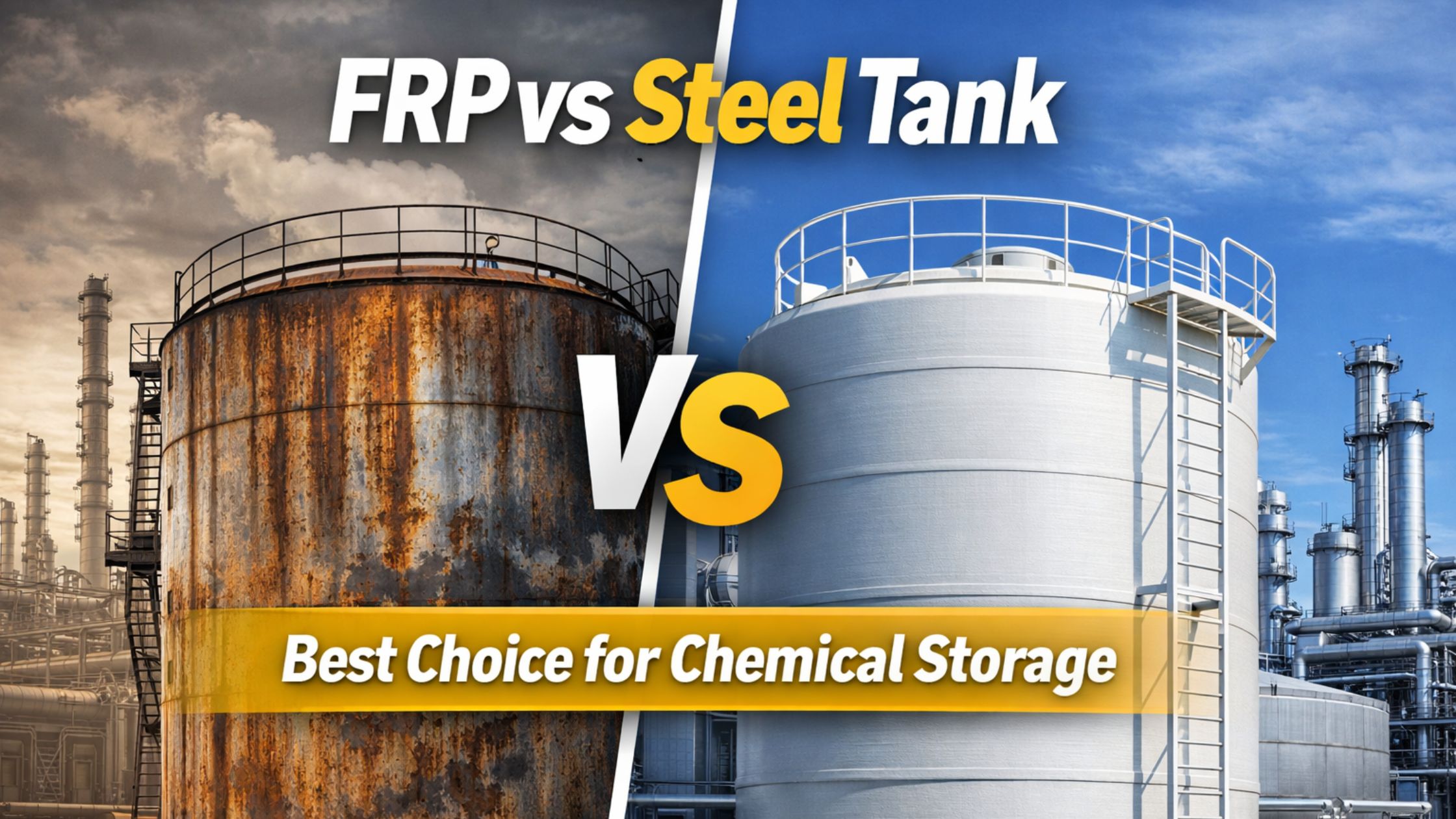
When evaluating FRP Tank vs Steel Tank for Chemical Storage, industries must carefully consider durability, safety, and long-term performance.
Steel tanks have been used for decades due to their strength and familiarity in industrial environments. However, modern industries increasingly prefer FRP (Fiber Reinforced Plastic) tanks because of their corrosion resistance, lightweight design, and long service life.
To better understand why FRP is gaining popularity, you can also explore the advantages of FRP tanks in industrial applications.
When businesses evaluate tank options, they often compare durability, safety, cost, and maintenance requirements. This is why understanding the difference between these materials is essential for selecting the most suitable storage solution.
Understanding FRP Tanks and Steel Tanks
Before comparing both options, it is important to understand what these tanks are and how they are used in industrial environments.
What Is an FRP Tank?
FRP stands for Fiber Reinforced Plastic, a composite material made by combining resin with reinforcing fibers such as glass fiber. This combination creates a strong, lightweight, and corrosion-resistant material suitable for industrial use.
FRP tanks are commonly used for storing:
- Acids and chemicals
- Industrial liquids
- Wastewater
- Process liquids in manufacturing plants
Because of their durability and resistance to chemical reactions, many industries prefer working with a trusted FRP tank supplier in India when selecting storage solutions.
For a broader understanding, you can read about FRP storage tank applications
What Is a Steel Tank?
Steel tanks are typically made from carbon steel or stainless steel. They are known for their mechanical strength and ability to handle heavy loads.
Steel tanks are commonly used for:
- Oil storage
- Water storage
- Fuel storage
- Certain industrial chemicals
However, steel tanks may require additional protective coatings when used for corrosive chemicals.
FRP vs Steel Tanks Comparison
To understand which option works better for chemical storage, it is useful to compare them based on key factors such as corrosion resistance, durability, maintenance, and cost.
A detailed comparison of FRP Tank vs Steel Tank for Chemical Storage helps industries make informed decisions based on operational needs and safety requirements.
Corrosion Resistance
One of the biggest challenges in chemical storage is corrosion.
FRP Tanks
FRP tanks offer excellent resistance to corrosion because the material itself does not react easily with chemicals. The resin used in the manufacturing process can also be customized to handle specific chemicals.
This makes FRP tanks highly suitable for industries that handle:
- Acidic liquids
- Corrosive chemicals
- Chemical processing waste
Many industries prefer working with an experienced FRP rectangular tanks manufacturer to ensure tanks are designed specifically for chemical compatibility.
Steel Tanks
Steel tanks are vulnerable to corrosion when exposed to chemicals. Although protective coatings and linings can reduce corrosion, they require regular inspection and maintenance.
Over time, corrosion can weaken the tank structure, leading to potential safety risks.
Chemical Storage Safety
Safety is a major concern in industries dealing with chemicals.
FRP Tanks
FRP tanks provide excellent chemical resistance and structural stability. Because the material does not rust or corrode easily, the risk of chemical leakage due to corrosion is significantly reduced.
FRP tanks are often designed specifically for chemical processing industries, making them a safer option for long-term storage.
Steel Tanks
Steel tanks can safely store certain chemicals, but they require proper coating or lining. If the protective layer gets damaged, the chemical may start reacting with the metal surface.
This can lead to corrosion, contamination, and potential structural damage.
Durability and Lifespan
Durability is another key factor when selecting a tank for industrial use.
FRP Tanks
FRP tanks are known for their long service life. They can withstand harsh environmental conditions such as moisture, chemicals, and temperature variations.
Because they resist corrosion and chemical reactions, FRP tanks often last longer with minimal maintenance.
Steel Tanks
Steel tanks are strong and durable in many applications. However, in environments with corrosive chemicals, their lifespan may be reduced if protective coatings are not maintained properly.
Regular maintenance is necessary to extend their service life.
Maintenance Requirements
Maintenance plays a major role in long-term operational costs.
FRP Tanks
FRP tanks require relatively low maintenance because the material naturally resists corrosion and chemical damage. They do not need frequent repainting or anti-corrosion treatments.
This makes them a cost-effective solution for industries seeking long-term chemical storage systems.
Steel Tanks
Steel tanks require routine inspection and maintenance to prevent corrosion. Protective coatings must be checked periodically, and repairs may be necessary if corrosion occurs.
These maintenance requirements can increase operational costs over time.
Weight and Installation
FRP Tanks
FRP tanks are lightweight compared to steel tanks. This makes them easier to transport, install, and relocate when necessary.
The reduced weight also simplifies installation in areas with limited structural support.
Steel Tanks
Steel tanks are significantly heavier, which can make transportation and installation more complicated. Heavy lifting equipment is often required during installation.
Industrial Applications of FRP Tanks
FRP tanks are widely used across multiple industries because of their durability and corrosion resistance.
Some common applications include:
- Chemical processing plants
- Pharmaceutical industries
- Food processing industries
- Wastewater treatment plants
- Petrochemical industries
- Fertilizer manufacturing
Industries that require customized tank solutions often rely on a trusted FRP tank manufacturer in India to design tanks that meet their specific storage requirements.
Why Industries Are Choosing FRP Tanks
Over the years, FRP tanks have gained popularity due to several advantages.
Key benefits include:
- High resistance to chemical corrosion
- Lightweight structure
- Long service life
- Low maintenance requirements
- Customizable design options
These advantages make FRP tanks a practical choice for industries looking for reliable chemical storage solutions.
Role of Fibrograts Pvt Ltd in FRP Tank Manufacturing
When selecting an FRP tank supplier, industries often look for manufacturers with strong technical expertise and experience in composite materials.
Fibrograts Pvt Ltd has established itself as a recognized name in the FRP manufacturing sector in India. The company specializes in designing and producing a wide range of FRP products used in industrial applications.
With advanced manufacturing capabilities and engineering expertise, Fibrograts develops customized storage solutions designed for chemical processing, industrial plants, and infrastructure projects.
The company is known for producing high-quality FRP storage systems, including rectangular tanks and specialized industrial tanks designed to meet demanding operational conditions.
As a trusted FRP tank supplier in India, Fibrograts focuses on delivering durable and reliable storage solutions for industries that require corrosion-resistant materials.
Conclusion
Selecting the right storage tank is crucial for industries that handle chemicals and corrosive materials. While steel tanks have been widely used for many years, they require protective coatings and regular maintenance to prevent corrosion.
FRP tanks, on the other hand, offer superior corrosion resistance, lightweight construction, and long-term durability. These advantages make them a reliable choice for chemical storage in many industrial applications.
When comparing FRP Tank vs Steel Tank for Chemical Storage, businesses often find FRP tanks to be the more efficient and cost-effective solution for long-term use.
For industries searching for a dependable FRP tank manufacturer in India, working with experienced companies that specialize in FRP technology can ensure safe and efficient