Harsh Chemical Environments Demand Smarter Building Materials
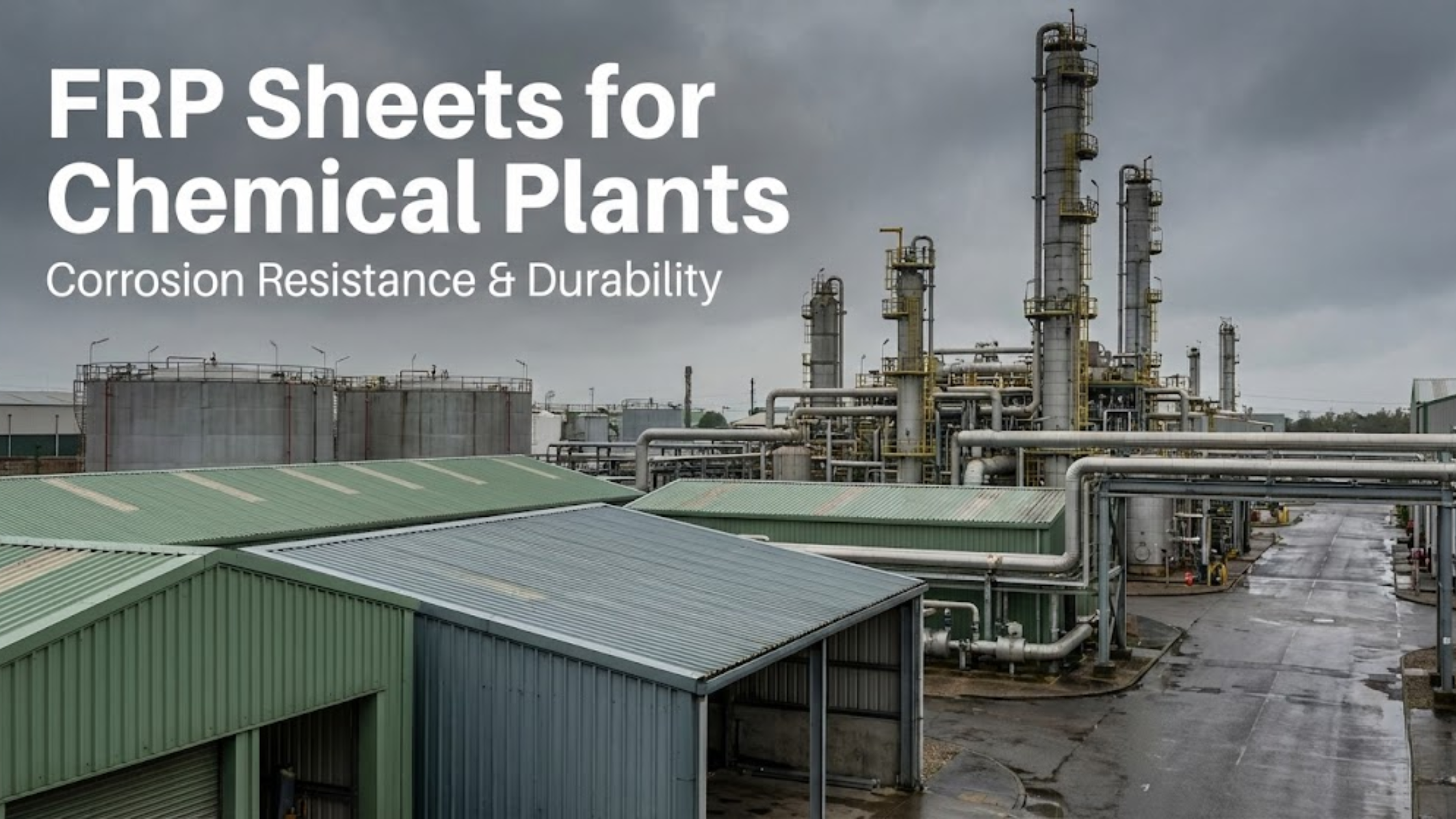
Chemical plants operate in some of the harshest industrial environments. Acidic fumes, chemical splashes, moisture, and constant humidity create conditions where ordinary construction materials fail much faster than expected. Roofing, wall cladding, and protective enclosures in these facilities must withstand continuous exposure to corrosive elements without compromising safety or structure. This is why industrial designers and plant owners increasingly rely on FRP Sheets for Chemical Plants instead of traditional metal or cement-based products. FRP materials offer corrosion resistance, long service life, and lower maintenance—making them highly suitable for chemical processing zones.
Why Chemical Plants Need Corrosion-Resistant Sheet Materials
Chemical plants deal with vapors, fumes, and liquids that slowly attack conventional building materials. Acids, alkalis, solvents, and salts mix with moisture in the air and settle on roofing and walls, accelerating corrosion. Over time, this leads to rust, leaks, structural weakening, and even safety hazards for workers.
Frequent repairs, repainting, and sheet replacement increase downtime and operating costs. That is why facilities in the FRP sheets for chemical industry category require materials that can survive aggressive environments without degrading quickly. Corrosion-resistant sheets ensure stable operations, safer workplaces, and predictable maintenance planning.
What Makes FRP Sheets Suitable for Chemical Plant Environments?
Composite Strength + Lightweight Structure
FRP sheets are made from fiberglass reinforcement combined with high-performance resins. This composite structure provides high mechanical strength while remaining much lighter than steel or concrete, reducing load on industrial roofing and support structures.
Moisture Resistance & Low Maintenance
Unlike metal sheets, FRP does not absorb moisture or rust. It remains stable in humid chemical plant atmospheres and does not require periodic painting or anti-corrosion coating.
Long-Term Durability in Harsh Conditions
Designed for industrial exposure, FRP Sheets for Chemical Plants maintain their integrity even when exposed to fumes, heat, and chemical mist for years, making them a dependable choice for long-term plant infrastructure.
Chemical Resistance of FRP Sheets (Explained Simply)
FRP sheets perform exceptionally well against common chemical plant hazards such as acids, alkalis, salts, and industrial vapors. Their resistance comes mainly from the resin system used during manufacturing. Different resins are selected depending on the chemical exposure level, ensuring compatibility with plant operations.
In addition, surface coatings and gel coats are applied to further enhance chemical resistance. These layers act as a protective barrier, preventing direct contact between chemicals and the structural fibers. This is why chemical resistant FRP sheets remain strong and stable even in highly corrosive processing areas.
Need Expert Guidance on Choosing the Right FRP Sheet?
👉 Not sure which FRP sheet grade will suit your chemical environment? Contact FGPL for application-based guidance from the manufacturer.
Where FRP Sheets Are Used in Chemical Plants
FRP sheets are used across multiple sections of modern chemical facilities, including:
- Roofing for processing and reaction areas
- Wall cladding near chemical storage and handling zones
- ETP and STP shed roofing
- Utility blocks and corrosive workspaces
- Pump houses and maintenance sheds
These applications explain why FRP sheets for chemical plants in India are now standard for both new projects and plant upgrades.
Performance Factors to Check Before Selecting FRP Sheets
UV Exposure
Outdoor chemical plants require UV-stabilized sheets to prevent discoloration and surface degradation under sunlight.
Temperature & Humidity
FRP sheets must handle heat, moisture, and chemical vapors simultaneously without warping or weakening.
Thickness and Profile Selection
Wave and box profiles offer different load capacities and drainage efficiency. Choosing the correct thickness ensures safety and longevity for FRP Sheets for Chemical Plants.
Installation Quality & Sealing
Proper installation and sealing prevent leaks, chemical ingress, and structural stress.
Installation Best Practices in Chemical Plants
To maximize performance, FRP sheets must be installed correctly:
- Use proper overlap to avoid leakage
- Use corrosion-resistant fasteners and washers
- Drill holes carefully to avoid cracking
- Maintain adequate roof slope for drainage
- Seal joints to prevent chemical fumes from entering
Good installation is just as important as good material quality.
Common Problems Seen in Chemical Plant Roofing (And How FRP Prevents Them)
Metal roofs often rust due to chemical exposure, leading to leaks and frequent repairs. Over time, corrosion holes appear, causing safety risks and contamination. Some materials also become brittle due to UV and chemical attack.
By contrast, FRP sheets do not rust, do not corrode, and resist chemical and UV damage. This makes FRP sheets for chemical industry a far more reliable and cost-effective solution over the plant’s lifecycle.
Why Choose FGPL for FRP Sheets for Chemical Plants?
FGPL is a specialized manufacturer of industrial FRP solutions designed for demanding environments. The company offers:
- Application-specific FRP sheet customization
- Strict quality assurance
- Manufacturing consistency for large industrial orders
- Technical project support from design to installation
For companies seeking reliable FRP sheets for chemical plants in India, FGPL provides both product performance and manufacturing expertise.
📌 Partner with a Trusted FRP Sheet Manufacturer
👉 Planning chemical plant roofing or cladding? Send your requirement to FGPL and get the right FRP sheet recommendation with manufacturing support.
Conclusion: Making a Smart Material Choice for Chemical Plants
Chemical plants require roofing and cladding materials that can withstand corrosive fumes, moisture, and extreme operating conditions. FRP sheets offer superior resistance, low maintenance, and long-term durability, making them ideal for these environments. By selecting the right grade and installing it correctly, plant owners can significantly reduce maintenance costs and improve safety. For modern chemical facilities, FRP is not just an option—it is a reliable industrial solution.
Frequently Asked Questions ✅
1. Are FRP sheets safe for acidic environments?
Yes. FRP sheets are designed to resist acids, alkalis, and chemical vapors. When manufactured with the correct resin and surface protection, they remain stable and strong even in acidic plant areas.
2. Do FRP sheets rust or corrode?
No. FRP is non-metallic, so it does not rust or corrode. This makes it ideal for chemical plants where moisture and chemical exposure destroy conventional metal roofing.
3. Can FRP sheets be used near chemical storage tanks?
Yes. FRP sheets are commonly used for cladding and roofing around chemical storage zones because they resist fumes, splashes, and corrosive atmospheres.
4. Are FRP sheets suitable for ETP and STP areas?
Absolutely. FRP performs well in wastewater treatment and effluent areas where moisture, chemicals, and gases are continuously present.
5. What factors decide the right FRP sheet for chemical plants?
Chemical exposure level, UV conditions, temperature, thickness, and profile type all help determine the right FRP sheet for a specific plant zone.
6. Why buy FRP sheets from a manufacturer?
Buying directly from a manufacturer ensures proper resin selection, quality control, customization, and technical support—critical for chemical plant applications.